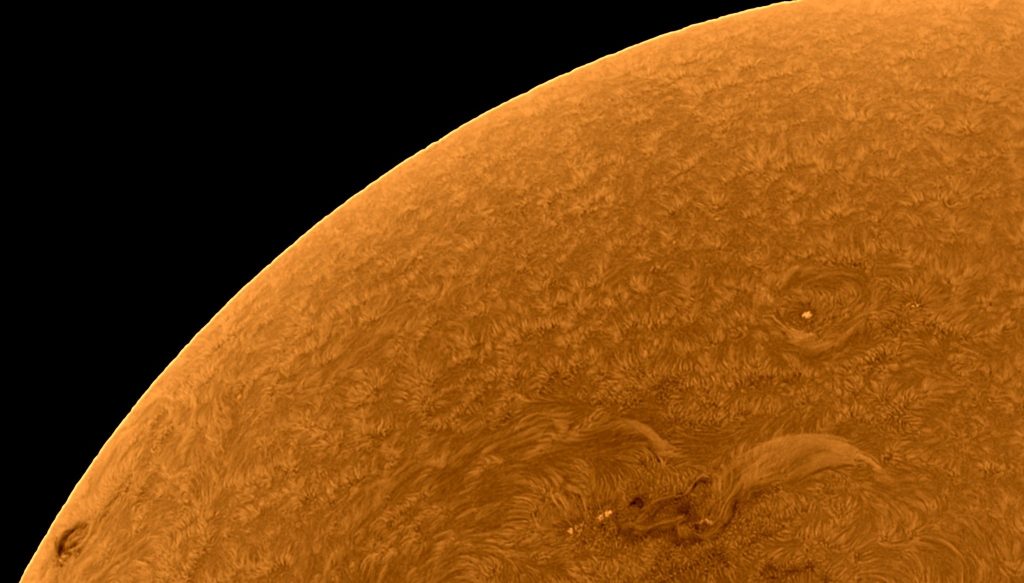
While most astronomy involves being outside on cold winter nights there are a few options that are a little easier. Solar imaging is best during the day. And best when the sun is high in the sky with few clouds. So that’s a bright summers day 🙂 Also as the Sun is still at an active parts of its 11 year solar cycle there is plenty to see.
Solar imaging equipment is a little different to deep sky or planetary set ups. To get the detail shown on this page a solar hydrogen alpha filter is needed. I have been using the Quark Chromosphere. Solar imaging is not too demanding on telescope optics as only a very small part of the visible spectrum is used, so no need for the scope to be well colour corrected. I have been using a second hand Skywatcher Evostar 120. A touptek imx533 camera was used as it has a good sensor size.
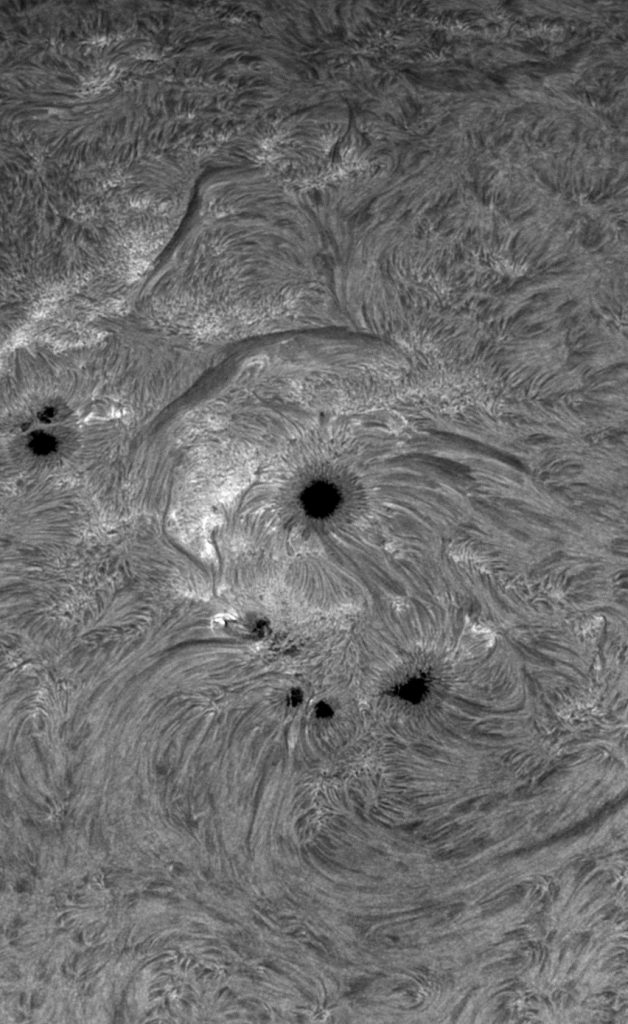
This picture taken on 19th May 2024 at solar max is about the best I have done so far. Its a sunspot group showing filaments, spicules and fibrils.
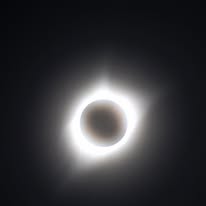
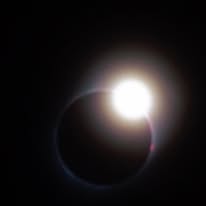
I cant leave the solar section without a couple of the 2017 Eclipse taken from Casper ,Wy.